

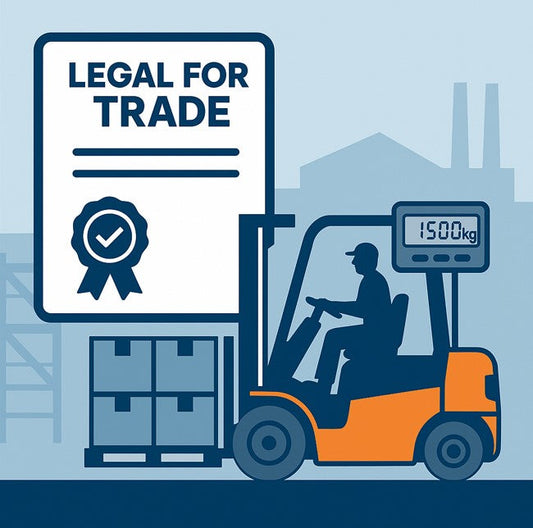
Legal for Trade Weighing Systems: Verified Weighing for Invoicing
Companies that invoice customers on the basis of weight must use a suitable weighing system. A Legal for Trade (LFT) weighing system – also called a certified or trade-approved scale – meets all the legal requirements, so that weighing for invoicing is accurate and reliable. In this article we discuss what Legal for Trade means, which legal requirements apply, how the verification process works, why periodic re-verification is essential and what benefits this offers your business.
What is Legal for Trade?
Legal for Trade (LFT) refers to an officially approved weighing system that is suitable for commercial transactions based on weight. An LFT weighing system is verified and approved for trade use, which guarantees that it meets strict standards for accuracy and reliability.
In practice, the terms inspection and verification are both used for this process, and "verified scale" is the term you will hear most often. The International Organization of Legal Metrology (OIML), www.oiml.org draws up uniform guidelines worldwide to ensure consistent standards for weighing systems, which promotes fair trade.
In many countries, businesses that weigh and sell products on the basis of weight must use an LFT weighing system. This is mandatory in sectors such as the supply of raw materials, the food industry and transport (for example air freight). Such systems ensure correct invoicing and increase the trust of customers and partners in the transactions.
Legal Requirements
Legal for Trade weighing systems must meet strict legal standards. All components, such as load cells and the indicator/display, must meet international requirements for accuracy and reliability. In Europe these systems fall under European Directive 2014/31/EU for non-automatic weighing instruments (NAWI), which sets out the requirements for trade scales.
Measuring instruments are supervised by a national authority (in the Netherlands, for example, the RDI, www.rdi.nl ). A weighing system must have a type approval and undergo an initial verification before it may be used for invoicing; for the scales we supply, the initial verification is carried out by the manufacturer. During verification it is tested for accuracy, protection against tampering and performance under environmental influences. If the system is rejected, for example because of inaccuracy or missing seals, it may not be used. Once approved, it receives the green M mark (metrology marking) and a certificate.
The Verification Process
The verification process for an LFT weighing system comprises the following steps:
- Checking Components: An accredited party, such as a certified supplier, checks the system and all its components.
- Testing with Reference Weights: The scale is tested with certified weights to verify its accuracy.
- Repeatability and Stability: The system is checked for consistent measurements and stability under external influences.
- Approval and Sealing: After successful tests, the system receives a certificate and is sealed.
After this process, the weighing system is certified Legal for Trade and ready for use, without any additional external weighing.
Periodic Re-verification
Periodic re-verification is crucial for maintaining accuracy and is often a legal requirement. A weighing system must be verified when it is put into service and then re-verified periodically, for example after a repair or in accordance with sector-specific rules. If it fails, for example due to ageing or defects, the system must be modified or replaced. Annual checks are recommended, even where there is no legal obligation, to prevent errors. Re-verification may only be carried out by authorised bodies; for the scales we supply, re-verification is arranged through the manufacturer.
Benefits for Your Business
Using Legal for Trade weighing systems offers several benefits:
- Invoice Directly: Weigh and invoice on the spot without extra steps.
- Efficiency: Save time and costs by integrating weighing into logistics processes.
- Reliability: Accurate measurements strengthen customer trust.
- Compliance: Comply with the law and avoid fines during inspections by the authorities.
- Flexibility: Integrate LFT systems into existing vehicles or workflows.
Conclusion
A Legal for Trade weighing system optimises your business processes and guarantees transparency. Moreover, it is mandatory for trade use. For more information, or to ask about scales supplied verified from the factory, please get in touch via our link: Contact