

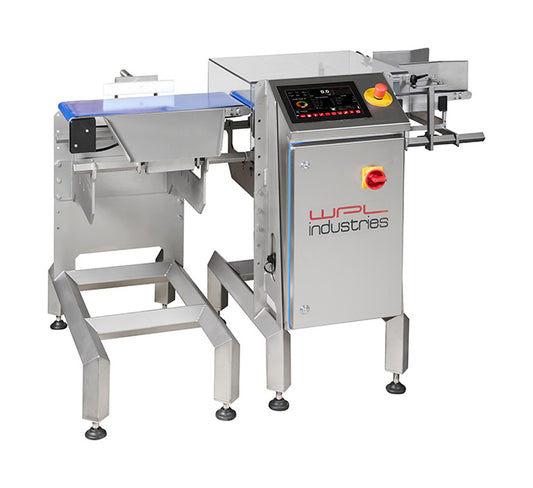
Checkweighers are essential in modern industrial environments where precision and reliability come first. They are invaluable for maintaining high standards and optimising processes. The WPL Industries CW3300 is an example of an advanced checkweigher that fits the diverse needs of modern manufacturers perfectly. With its versatility and reliability, it plays a key role in ensuring quality and regulatory compliance within the industry.
What is a Checkweigher?
A checkweigher is a specialised weighing device designed to check whether products meet preset weight criteria. Unlike standard scales, checkweighers go one step further by comparing the measured weight with a preset target weight or weight range. They are crucial in sectors where precision and quality are paramount, such as food and beverages, packaging, pharmaceuticals, manufacturing and logistics.
How do Checkweighers Work?
Checkweighers use a combination of hardware and software to perform their functions. The process begins when an item is placed on the weighing platform of the scale. The scale's load cell, a sensor that converts the weight of an object into an electrical signal, detects the weight of the item. The load cell sends the weight measurement to the scale's internal computer or controller. This weight data is then processed and shown on the scale's display.
Checkweighers use a preset target weight or weight range stored in their memory. This target weight is set and stored by the operator. The controller compares the measured weight of the item with this target weight. Based on the comparison, the scale's software makes a decision about the weight of the item. If the measured weight falls within the acceptable range, the item is considered to be the correct weight. If the measured weight deviates from the target weight, the item is flagged as underweight or overweight.
The e-mark: a Guarantee of Compliance with Standards
The e-mark, also called the "℮" mark, is a mark used in the European Union (EU) for certain prepacked products. This mark indicates that the product has been checked and approved in accordance with the EU directives for correctly stating the quantity of the product. It is particularly important in sectors such as food and beverages, where consumers rely on accurate information about the quantity they are buying.
When you see the e-mark on a package, it means the product meets the legal requirements regarding the net quantity of the product. It gives consumers confidence that they are getting what they expect and helps maintain fair trading practices within the EU internal market.
Conclusion
Moreover, checkweighers for e-marked products, such as the CW3300, are particularly valuable because they support compliance with the legal requirements regarding the net quantity of the product. These checkweighers have been checked and approved in accordance with EU directives, making them suitable for sale within the European Union and other markets that follow this standard. As a result, they give consumers confidence that they are getting what they expect and help maintain fair trading practices within the EU internal market.