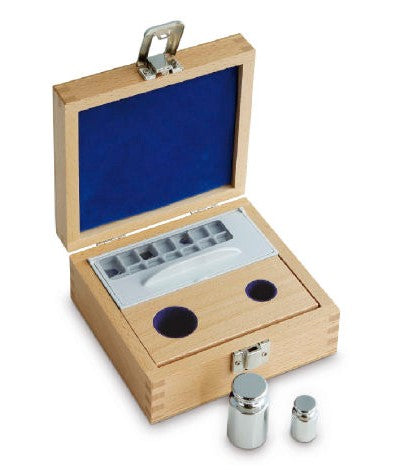
Maintaining the accuracy of calibration weights is crucial for a wide range of industrial and laboratory applications. Calibration weights are used to check and ensure the accuracy of scales, analytical balances and other measuring instruments. Over time, however, these weights can lose their precision as a result of various factors, such as exposure to environmental influences, wear and incorrect use. With the right care and maintenance, however, their durability can be increased and their accuracy maintained.
Storing weights:
A crucial factor in maintaining the accuracy of calibration weights is proper storage. Weights should be kept in the lined case supplied or in a suitable plastic tube. Even small dust particles can affect the weight, especially with milligram weights. It is therefore essential to maintain a clean and dry storage environment to prevent contamination and possible damage.
Handling weights:
Care is needed when handling calibration weights. Using gloves or the tweezers supplied is recommended to prevent grease and dirt from your fingers getting onto the weight. Even small amounts of grease can affect the accuracy of the weight, so it is essential to follow strict hygiene measures.
Temperature control:
Temperature differences can affect the calibration of weights, so it is essential to keep the scale and the weights at the same temperature during use. Temperature fluctuations can cause materials to expand or contract, which can disturb the accuracy of the measurements. It is therefore important to monitor the ambient temperature and to stabilise it where possible.
Certification and class of weights:
It is also important to consider whether the calibration weights are certified and whether they meet the required class for the specific application. Certified weights have a traceable calibration and meet international standards for accuracy. Different classes offer different levels of accuracy, so it is essential to choose the right class based on the requirements of the application.
Importance of the surface:
The surface of the weight is also of crucial importance for durability and reliability. A smooth and clean surface, as on metal weights made of materials such as brass, aluminium and cast iron, is the easiest to maintain and contributes to accurate measurements. Rough or damaged surfaces can affect the accuracy of the measurements and should therefore be avoided.
If you have any questions about this blog or about weights, or need advice, our product specialists are ready to help. Feel free to contact us on +345570558 on all working days between 9.00 and 16.00. We are happy to help you keep your calibration weights up to date for accurate measurements.
Storing calibration weights